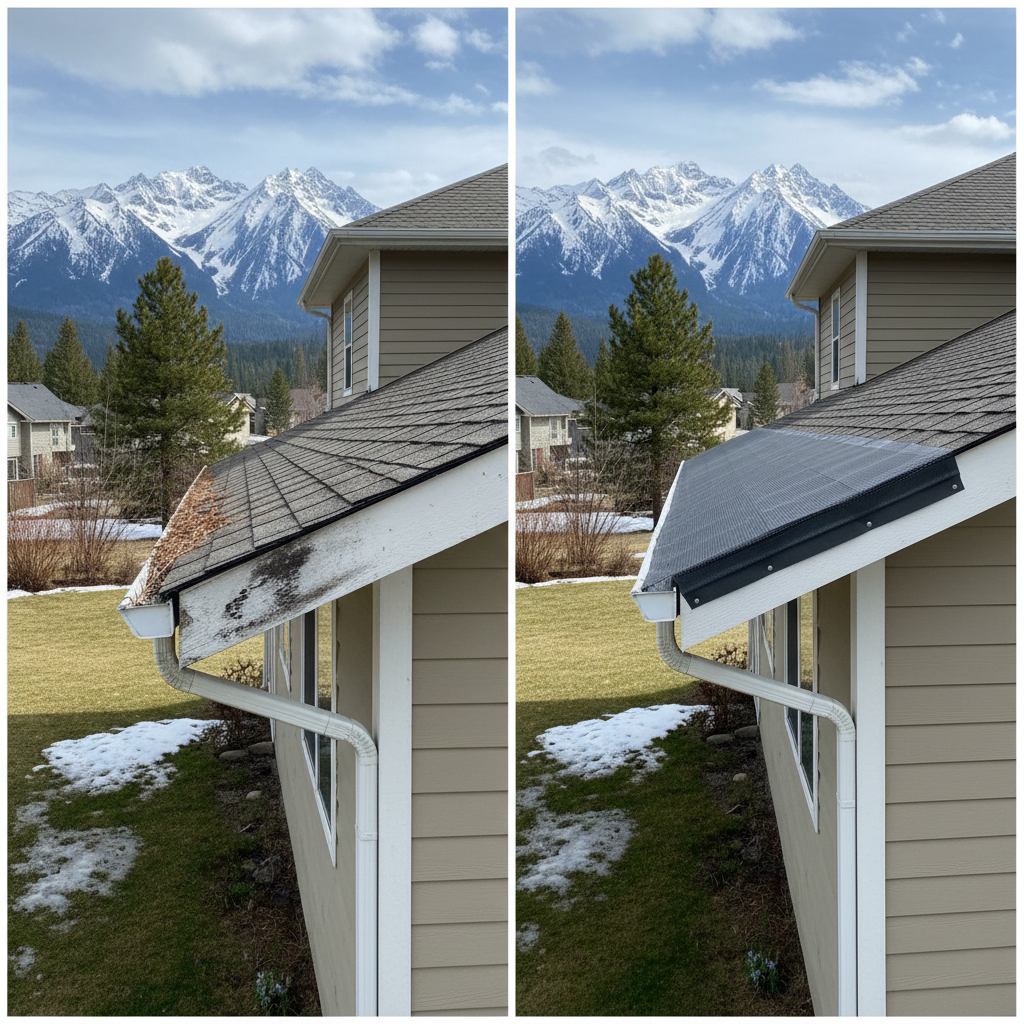
So, you're thinking about gutter guards – and honestly, that's a smart move, especially here in Whitefish. But once you start poking around, you'll quickly see it's not just one type of guard out there. Basically, these things get installed in one of two ways: they either fit inside your existing gutters, or they go over them. Each method has its own pros and cons, and what works great for one house might totally miss the mark for another, particularly with our unique weather challenges.
The "Inside the Gutter" Approach: Screens and Filters
When I talk about guards that fit inside, I'm usually thinking about stuff like mesh screens, foam inserts, or those brush-style filters. These are made to sit right down in the gutter trough, letting water through but stopping bigger debris.
Cost
Generally speaking, these are your more budget-friendly choices right off the bat. You can grab basic screen covers at pretty much any hardware store, and putting them in is often simple enough for a handy homeowner to do themselves. Though, I always suggest professional installation – just to make sure they're really secure and won't fly off in a good Whitefish windstorm, you know?
Durability
Now, this is where things can get a little tricky. Our harsh sun and freezing temperatures can make basic plastic screens brittle over time. Foam inserts? They can break down, soak up moisture, and even become a perfect spot for mildew if they don't dry out properly. Brush guards, well, they're great at catching pine needles and other small bits, but eventually, you'll need to pull them out and clean them. Higher-quality metal screens will definitely last longer, but they still sit inside the gutter, meaning they're constantly exposed to the elements and whatever gunk washes down.
Maintenance
Don't let anyone tell you these are 'maintenance-free.' They definitely cut down on maintenance, sure, but they're not zero-maintenance. Over time, smaller stuff like shingle grit, pine needles, and even pollen can pile up on top of or inside these guards. If you've got a lot of evergreens around your place, like those Ponderosa pines common in the Lion Mountain area, those needles will absolutely find a way to stick. You'll still need to climb up there every now and then to brush them off or even take them out for a deeper clean. The whole point is to stop clogs, but if the guards themselves get clogged, you're right back where you started.
Appearance
Most of these are designed to be pretty low-profile. They sit inside the gutter, so you usually can't see them much from the ground, especially if your gutters are already a dark color. They won't really change how your roofline looks.
The "Over the Gutter" Approach: Surface Tension & Hooded Systems
This is where you get into the tougher, often professionally installed systems. These guards typically have a solid top surface that stretches over the gutter opening, with a small gap or curve at the front edge. Water sticks to the surface (that's surface tension for you) and flows around the curve into the gutter, while debris just slides right off the edge.
Cost
These systems are almost always a bigger investment upfront. They use more material, involve more complex engineering, and usually need professional installation to make sure the pitch is right and everything's sealed up tight. You're paying for a more sophisticated solution, plain and simple.
Durability
This is where these systems really shine. They're usually made from heavy-gauge aluminum or other super durable metals, built to handle big snow loads, ice dams, and our crazy temperature swings. Because most of the debris slides off, the material itself isn't constantly fighting decomposing leaves or standing water. They're really built to last for decades.
Maintenance
This is as close to 'maintenance-free' as you're going to get with gutter guards. Since debris can't sit on a flat surface or get caught inside the gutter opening, it tends to just blow or wash right off. You might occasionally see some shingle grit or a stubborn leaf stuck to the very edge, but it's pretty rare. The main thing to watch out for is making sure no critters decide to nest underneath – but a good installation should prevent that. You definitely won't be up on a ladder nearly as often.
Appearance
These systems are more visible than the internal screens. They create a distinct profile along your roofline. Still, many modern designs are sleek and can actually make your home look better, giving it a clean, finished edge. They come in various colors to match your existing gutters or trim, which is nice.
My Recommendation for Whitefish Homes
Considering our heavy snowfall, those brutal freeze-thaw cycles, and all the trees we have around here, my honest recommendation for most Whitefish homeowners leans heavily towards the "over the gutter" or hooded systems. And why is that?
- Snow and Ice: Internal screens and foam can get completely buried under snow and ice. When that happens, they're useless and can even make ice dam problems worse. Hooded systems, on the other hand, are designed to shed snow and ice much more effectively.
- Pine Needles: Those tiny, relentless pine needles from our local forests are a total nightmare for mesh screens. They get stuck, they layer up, and they're just a pain to clean out. Hooded systems are way better at deflecting them.
- Durability: You want something that's going to stand up to our weather for the long haul, right? The robust construction of over-the-gutter systems means less worrying and fewer replacements down the line.
Sure, the upfront cost is higher, but the long-term savings on maintenance, the peace of mind, and the superior performance in our specific climate really make it a worthwhile investment. You're not just buying a product; you're buying a solution that actually works for Whitefish. We at Charis Gutter Solutions have seen firsthand what works and what doesn't in these conditions, and we're always happy to chat through your specific situation.